Mount Elizabeth Novena Specialist Centre
Parkway East Medical Centre
1 Farrer Park Station Road, Connexion

Tag: orthopaedic clinic singapore

Post
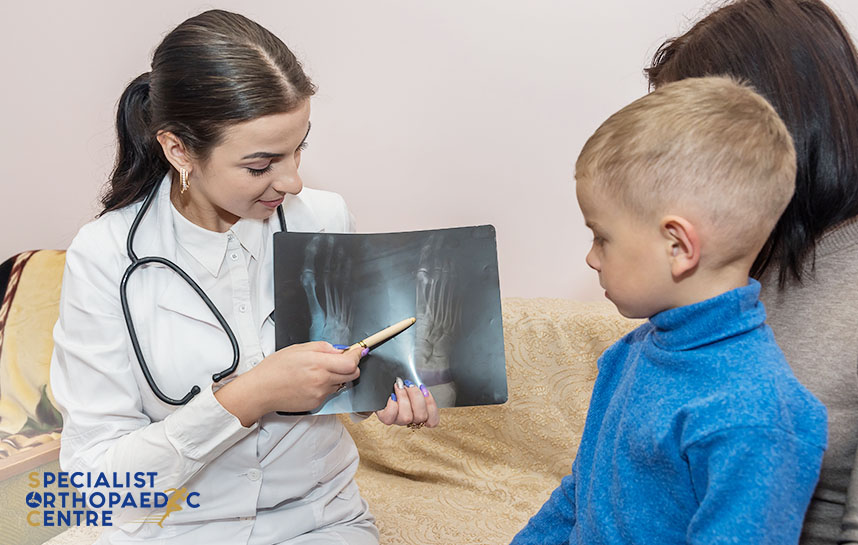
Flatfeet in children is a common condition as their bones and joints are still immensely flexible at a young age and their tendons take time to form an arch. While parents tend to worry about the abnormally low or absent arches in their children's feet, it is usually not a cause for concern since most will eventually outgrow the problem. As children grow and walk more, the soft tissues along the bottom of the feet tighten and shape the arch.  If your child’s flatfeet are not causing any pain or discomfort, treatment is oftentimes not required. But if flatfeet persist even after your child has entered adolescence, they may experience other symptoms like calf, feet or back pain which can affect their quality of life.  When that happens, it is advisable to bring your child to an orthopaedic specialist for an accurate diagnosis and treatment. Read on to find out more.  Signs and symptoms of flatfeet in children Children above 5 years old who have yet to outgrow their flatfeet may experience pain and stiffness after strenuous activities, trip and fall easily, have unbalanced shoulders, and walk with an unusual gait. Additionally, they may also feel pain when wearing shoes and have difficulty moving their feet from side to side and up to down.  Thus, it is important to bring your child to a doctor if he or she is suffering from any of the symptoms mentioned above. Early intervention is the key to preventing complications, such as scoliosis and bunions from forming.  Complications when flatfeet are left untreated Although there has been no evidence to show that flatfeet lead to the development of scoliosis (curved spine), these conditions can coexist especially when the shoulders become imbalanced, affecting the legs, pelvis and vertebrae.  An abnormally low arch may also cause bunions to develop as the improper structure of the feet results in poor alignment of the toes.  Furthermore, damage to the important tendon in the inner feet can cause adult acquired flatfeet to develop, leading to permanent deformity and the inability to stand on tiptoes.  In some cases, children with flatfeet may have an underlying medical condition such as a tarsal coalition (an abnormal connection between two or more bones in the back of the foot) or unstable navicular (unfused bones since birth) that will require further evaluation. Diagnosing flatfeet in children At the orthopaedic specialist’s clinic, the doctor will examine your child’s feet for calluses and heel cords for any tightness. These will help the doctor determine whether your child is suffering from flatfeet.  Further diagnostic tests may be required too, such as weight-bearing feet or long-leg standing x-ray to assess the alignment of the feet and diagnose abnormalities causing pain. These x-ray images will make for a more accurate diagnosis and determine the severity of your child’s flatfeet to suggest the appropriate treatments.  Treatment options for flatfeet in children Conservative treatments are usually recommended and necessary only if your child is experiencing discomfort.  The orthopaedic specialist may suggest wearing shoe inserts that can be either soft, firm or hard-moulded to relieve pain and fatigue on your child’s feet. This treatment method works 90% of the time and most patients experience an improvement in symptoms after wearing shoe inserts.  Your child may also be asked to practise stretching exercises that will help to relieve pain in the feet, ankles and legs. Stretches are also recommended if your child has a shortened Achilles tendon. Changing footwear is also an option, as supportive shoes are more comfortable than footwear with minimal support. While this will not correct flatfeet, it can provide day-to-day relief and prevent further damage. When conservative treatments prove to be ineffective, the doctor may suggest a minimally invasive surgery called Extraosseous Tarsal Tunnel Stabilisation (EOTTS). It involves placing a titanium stent through a 1.5cm small incision into the natural space between the ankle and heel bones to realign and stabilise the feet, and support the arch until the growth is completed. Most patients are able to return to normal activity without the need for special shoes or insoles after the surgery. Speak to an orthopaedic specialist today Although most flatfeet cases in children are not serious, it is still advisable to get them assessed by an orthopaedic doctor as timely intervention is key to preventing worse symptoms or damage. If your child is suffering from flatfeet and the symptoms mentioned, do not hesitate to bring him or her to an orthopaedic specialist as soon as possible.  Dr Kannan Kaliyaperumal is experienced in treating a range of orthopaedic conditions, including flatfeet in children, to help patients get back to doing what they love.  Get in touch with us today!
Post
Orthopaedic trauma refers to an injury to the skeletal or muscular system involving the bones, joints or soft tissue, and is usually caused by an external force. If the external force is significant, it can lead to broken bones or torn ligaments. These are traumatic conditions that warrant further investigations and sometimes even surgical fixation or repair to regain full function again.  Of the entire body, the upper and lower limbs are most susceptible to orthopaedic trauma due to their wide range of motion and the sheer frequency one uses them to complete daily tasks or participate in sports.  In this article, we will be focusing on lower limb trauma, including the common causes and treatment methods to help you gain a deeper understanding. Read on to find out more.  Common lower limb trauma  1.Ankle fracture An ankle fracture can occur in any of the three bones – the tibia, fibula and talus. It can also be categorised as non-displaced or displaced; the former refers to bones that are broken but still in the right position or alignment while the latter refers to portions of the bone that are separated or misaligned. In more severe cases, the ankle might appear deformed or bone might protrude out of the skin.  2.Kneecap fracture A kneecap fracture, also known as a patellar fracture, impacts the small bone that sits at the front of your knee. Since its main function is to act as a shield for your knee joint, suffering trauma to the area can make it hard to bend or straighten your knee, and even walk. There are also different types of kneecap fractures – a stable fracture refers to non-displaced bones, a displaced fracture refers to bones that do not line up correctly, and a comminuted fracture refers to bone that shatters into three or more pieces. One of the earliest signs of a kneecap fracture is the loss of extension or function of the knee.  3.Hip fracture Although hip fracture rates for men and women in Singapore are on the decline, it does not mean that you are no longer at risk. It is still a fairly common orthopaedic trauma condition and can be very painful. A hip fracture can cause injury to the femoral neck, intertrochanteric area, subtrochanteric area and femoral head. You will not be able to stand, bear weight or move the upper part of your leg or knee when a hip fracture occurs. The elderly with osteoporotic bone are more prone to hip fractures from low-energy trauma like simple falls, whereas younger patients who sustain a hip fracture tend to sustain high-energy trauma from a motor vehicle accident.   4.Tibia shaft fracture The tibia, more commonly known as the shinbone, is one of the most commonly fractured bones in the body. It occurs below the knee and above the ankle, and can fall under a few types of fractures – transverse fracture refers to a break in a straight horizontal line while an oblique/spiral fracture refers to an angulated fracture. Tibia shaft fractures are potentially unstable and these are usually treated surgically. Causes of lower limb trauma One of the most common causes of lower limb trauma is sports injury as a result of a collision with other players on the field and applying more force than the body can take. For instance, sports like football that require quick foot movements may make you more prone to suffering from an ankle fracture.  However, something as simple as a fall or a bad ankle sprain can also result in lower limb trauma. People who have overused their joints may result in stress fractures appearing while older patients with osteoporosis may suffer a fracture from the weakening of their bones.  Treatment methods for lower limb trauma You will be glad to know that not all fractures require surgical intervention – non-invasive treatments can sometimes be effective too. The treatment option depends on the nature and pattern of the fracture. Non-displaced fractures and paediatric fractures are generally treated non-surgically. For example, wearing a splint or cast helps to promote healing by keeping the injured part immobilised. Non-surgical treatments like this may require a period of immobilisation followed by serial x-rays to monitor fracture healing and eventually followed by rehabilitation.  But for more serious cases such as displaced or comminuted fractures, surgery may be necessary. Your orthopaedic specialist may recommend surgical fixation of the fracture using titanium screws and plates. Surgical fixation restores the anatomy of the bone and alignment, keeping your ankle stable. Each type of orthopaedic trauma requires different treatment methods and they are dependent on your specific condition as well.  Recovering from lower limb trauma Most lower limb fractures take six weeks to heal and you may still need further physical therapy to help you regain strength and full mobility.  It is recommended to go for regular X-ray follow-ups, especially if your fracture is taking longer than usual to heal.  Speak to an orthopaedic doctor today Dr Kannan Kaliyaperumal is an experienced doctor in Singapore who subspecialises in foot and ankle surgery.  He offers both non-invasive treatments as well as orthopaedic surgery options for patients of all ages and concerns.  Get in touch with us to find out more!
Post
The knee is one of the strongest and most important joints in the body, supporting your weight and allowing you to move your lower leg comfortably and freely. However, a severely damaged knee joint as a result of arthritis or injury can make simple everyday activities like walking, squatting and jumping difficult. When that happens, considering undergoing knee replacement surgery in Singapore is crucial to help you regain your quality of life. In this article, we will be exploring when knee replacement surgery is required, as well as the latest advancements that make the procedure a preferred option for many patients. Read on to find out more. When do you need knee replacement surgery? If you have exhausted most non-surgical options such as taking medications and using walking supports but are still experiencing pain or a reduced range of motion, then knee replacement surgery may be beneficial for you. It is an alternative treatment method that will relieve pain and correct leg deformity, helping you to resume normal life and activities. Knee replacement surgery is now a routine procedure that is performed extensively by trained specialists with very good outcomes. It is also a standard procedure that is covered by insurance. Advancements in knee replacement surgery Since the first knee replacement surgery was performed in 1968, improvements in technology and surgical equipment over the years have made the procedure more effective for many patients and shortened hospital stays and recovery periods. Here are the two most common types of knee replacement surgery done by orthopaedic surgeons in Singapore: Robotic total knee replacement surgery A robotic knee replacement surgery (MAKOplasty®), just like its name suggests, utilises a robotic arm to allow orthopaedic surgeons to treat the damaged area with accuracy. This can be in the form of a total or a partial knee resurfacing procedure which offers precision to spare the surrounding bones and ligaments from unnecessary surgical trauma, making the recovery process easier and quicker. The procedure is considered minimally invasive since small incisions are made to reduce blood loss. It is also less painful and results in less scarring following the surgery. Unicompartmental partial knee replacement surgery If the disease is only limited to one area of your knee joint, another alternative to a total knee replacement surgery is unicompartmental partial knee surgery. Only a portion of your knee gets resurfaced with metal and plastic components during the procedure through smaller incisions. A unicompartmental partial knee replacement surgery is also less invasive and will result in less pain, blood loss and a reduced risk of infection. Most patients who have undergone the surgery spend less time in the hospital and can get back on their feet earlier than those who have gone through total knee replacement. As most parts of your knee joint are preserved, you will find that it feels more natural and comfortable to bend your knees and perform daily activities. It is advisable to speak to your orthopaedic surgeon to find out which option is more suitable for your condition and needs. There are several steps that are required. Steps to a knee replacement surgery Consultation with your orthopaedic specialist who will examine you and review your prior medical history. Proper weight-bearing x-rays of both the knees. Sometimes a CT scan may be necessary for preoperative planning when planning a robotic aided surgery or a partial knee replacement. After the investigations, the orthopaedic surgeon will discuss the surgery, risks and rehabilitation phase with you. Finally, a cost estimate is provided and insurance pre-authorisation for the surgery is done. Latest rehabilitation options After knee replacement surgery, your orthopaedic doctor will recommend some rehabilitation options that will aid in your recovery process. Continuous passive motion (CPM) CPM is a form of therapy in which a machine is utilised to move your knee joint without you physically moving it or exerting any effort. Its main purpose is to prevent joint stiffness after a knee replacement surgery and to improve your range of motion so you can get back to normal activities as soon as possible. Nerve blocks Injecting nerve blocks to the site of surgery is a form of pain management that has been proven to be really helpful for patients who have undergone knee replacement surgery. The risk of complications is low and the process entails minimal discomfort. You should be able to regain mobility fairly quickly and even return to playing sports in about eight weeks. Assisted bracing You may also be asked to wear an assistive device like a knee brace that comes equipped with a hydraulic pump as your muscles may be weak after undergoing knee replacement surgery, especially if you suffer from arthritis. You may also not have the inherent strength to get up from a seated position after surgery. Hence, a hydraulic brace stabilises the joint and allows you to get up without needing help. Speak to an orthopaedic surgeon today If you are considering undergoing knee replacement surgery but are unsure if it is the right option, speak to an orthopaedic surgeon today. Dr Kannan Kaliyaperumal is an experienced and fellowship-trained orthopaedic surgeon treating knee pain and doing knee replacement surgery. Get in touch with us!
Post
Acute orthopaedic injuries sustained while playing sports are very common. Although some are unavoidable as they can happen as a result of sudden accidents, there are still some things you can do to minimise such occurrences. In this article, we will be sharing more about the tips for preventing and treating orthopaedic injuries in sports. Read on to find out more. Preventing orthopaedic injuries in sports Always warm up and stretch Warming up and completing simple stretches before you exercise or participate in sports can help to prevent an orthopaedic injury. This indispensable step prepares your body for more strenuous activity by increasing your flexibility, promoting blood and oxygen circulation, reducing muscle tension, and giving you a wider range of motion. Wear the right gear It is important to wear the right gear before participating in any kind of sports, especially in contact sports like basketball and football where the chances of colliding with another player and sustaining an injury are higher. For instance, ankle guards or braces are some examples of gear recommended by foot and ankle specialists to reduce the blow in the event of an accident. Take breaks when needed It is advisable to take breaks whenever it is needed to prevent pushing your body past its limits which will only do more harm than good. Having adequate rest in between exercises or games will allow your muscles time to regain strength and your body to recover from fatigue. Performing activities and sports when your body feels ready may be helpful in avoiding orthopaedic injuries. Do not play through the pain Never ignore dull aches and continue playing sports through the pain just because they do not seem like a big deal. In fact, you would most probably have sustained a minor injury which can exacerbate if you continue straining it. It is recommended that you utilise the RICE method – Rest the injured limb, Ice the affected area, Compress with an elastic wrap or bandage, and Elevate the injured limb to prevent swelling. Remember to seek treatment at an orthopaedic clinic in Singapore early to prevent your condition from worsening. Treating orthopaedic injuries in sports Know the common orthopaedic injuries in sports Understanding the common orthopaedic injuries that can occur while playing sports will be useful in helping you to ascertain the next steps to take. Some common acute orthopaedic injuries include a sprained ankle, ACL tear, rotator cuff tear, meniscus tear, tennis elbow and stress fracture. The non-surgical and surgical treatment methods for these injuries differ, hence, it is always recommended to seek professional medical advice by visiting an orthopaedic clinic. Non-surgical treatments range from physiotherapy to injections while surgical treatments can involve keyhole procedures. Look out for signs and symptoms One of the tell-tale signs that you have sustained an orthopaedic injury is feeling pain in the affected area. Other symptoms include swelling, tenderness, bruising, numbness, bone deformity and a limited range of motion. In more severe cases, patients may not be able to bear weight on the affected limb too, especially if a dislocation or fracture has occurred. Seek prompt treatment Instead of heading to the ER and waiting hours before someone attends to you, consider visiting a specialist orthopaedic clinic instead. Same-day appointments are usually permitted for urgent cases so that patients do not have to wait longer than needed to seek treatment. This also means getting an accurate diagnosis for your condition and receiving prompt treatment, regardless of whether it is non-surgical or surgical. Simple investigations that the orthopaedic specialist will perform include x-rays or an MRI scan which can be arranged on the same day. Keep in mind that early treatment goes a long way in helping you to regain your quality of life. Understand the treatments available Some non-surgical treatment methods may help to relieve symptoms if your injury is mild. They include taking nonsteroidal anti-inflammatory medications and doing physical therapy exercises to strengthen your muscles and help you regain a full range of motion. Alternatively, an easy way to relieve symptoms in the comfort of your own home is the RICE method – rest, ice, compress and elevate. If your symptoms do not improve, it is recommended to seek treatment at an orthopaedic clinic. The orthopaedic surgeon may suggest surgery if conservative treatments prove to be ineffective. The type of surgery depends on the injury sustained and the severity of your condition too. It is advisable to seek prompt medical attention the moment you suspect you are suffering from an orthopaedic injury. This is crucial in helping to relieve symptoms and for you to bounce back to form, especially if you are an athlete, as soon as possible. Get in touch with us today!

Post
Children are naturally inclined to be active and energetic, and so it is natural that they may end up with accidental injuries.
Post
Orthopaedic surgeons often utilise surgery to treat orthopaedic conditions that are generally more severe in nature.
Search