Mount Elizabeth Novena Specialist Centre
Parkway East Medical Centre
1 Farrer Park Station Road, Connexion

Tag: physical therapy

Post
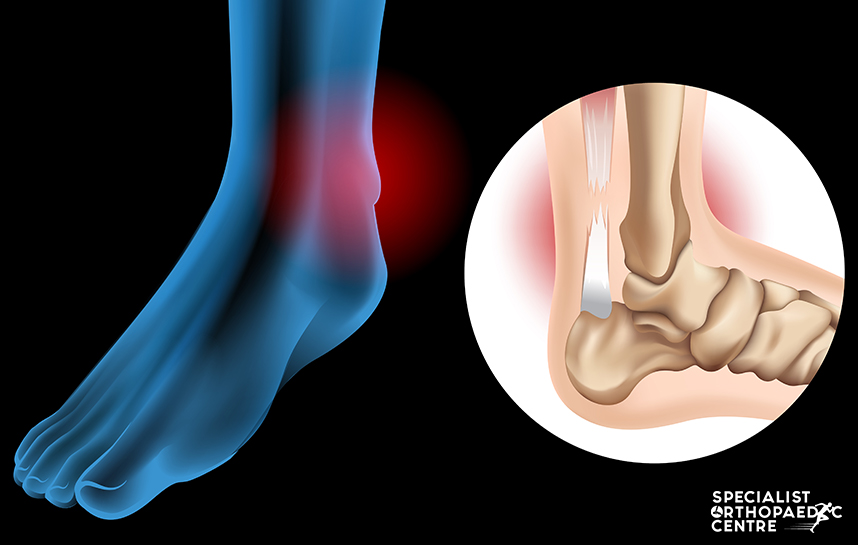
While the achilles tendon is the strongest and thickest tendon in the body, it also encounters a lot of stress on a daily basis, as well as during athletic activities that involve running, jumping, or sudden changes in direction. This makes the achilles tendon fairly susceptible to injuries in both high-performance athletes and regular people. Learn More: 3 Common Foot & Ankle Conditions You Shouldn’t Ignore Types of Achilles Tendon Injuries There are two main types of achilles tendon injuries. Tendonitis, which is due to overuse or damage of the achilles tendon or a rupture which is complete or partial break in your tendon. Tendonitis causes pain down the back of your leg and around your heel area.It can also lead to thickening and calcification of the tendon. There are two kinds of tendonitis, categorised by the location of the injury. If the fibres of the middle portion of the tendon are torn, then it is diagnosed as noninsertional achilles tendonitis. If the lower part of the tendon is injured then it is known as insertional achilles tendonitis. Both types of tendonitis can occur separately or together. If the tears in your achilles tendon fibres cause a complete or a partial tear in your tendon, you might hear a pop or experience a popping sensation along with a sudden sharp pain. A tendon rupture requires immediate medical attention. Risk Factors For Achilles Tendon Injuries Athletic Activities Athletes who engage in sports where there is repetitive strain put on their achilles tendon are at higher risk for achilles tendon injuries. A change in competitive or training schedule, playing surface, or intensity of activities can also create a sudden increase in strain to the achilles tendon resulting in a higher chance for tendon injury. Tight Or Weak Calf Muscles If you don’t warm up adequately before exercising, your calf muscles may be tight and you may end up overstretching it during your activity. Weak and untrained calf muscles can also cause similar issues. Overstretching your calf muscle can result in soft tissue damage to your achilles tendon. Bone Spurs Bone spurs can develop on almost any bone including the heel. Bone spurs on the heel can rub against the tendon, leading to long-term damage. Wearing Improper Footwear Wearing the wrong shoes during exercise or other activities can cause injury to your achilles tendon in Singapore. Shoes which don’t support your foot fully, or don’t allow your tendon to fully extend, can over time make your achilles tendon more vulnerable to overstretching and tearing. Treatments For Achilles Tendon Injuries RICE Rest, Ice, Compression, and Elevation is a good at-home treatment protocol for minor strains to the achilles tendon. It reduces swelling and decreases blood flow to the area to decrease inflammation and promote healing. Physical Therapy Physical therapy can support achilles tendonitis patients by reducing pain in the heel and restoring strength, flexibility, and mobility to the injured tendon. Orthotics Orthotics can be used in combination with other treatment methods for achilles tendon issues. They reduce the load on the achilles tendon and improve recovery timelines. Night Splinting Night splints are braces worn on the legs which stretch the achilles tendon at the back of the heel and prevent it from contracting. They have to be worn at night while you sleep to provide a constant stretch to your achilles tendon and enhance healing. They are a conservative but effective long term achilles tendonitis treatment in Singapore. Platelet Rich Plasma Injections Platelet Rich Plasma (PRP) Injections are done by taking some of the patient’s blood and spinning it to separate out the different layers. The plasma layer, which contains a high concentration of platelets is then drawn and injected into the injury site of the achilles tendon. These platelets can release growth factors which promote healing. Extracorporeal Shock Wave Therapy Extracorporeal Shock Wave Therapy is a non-invasive treatment procedure for achilles tendonitis. It involves delivering low energy sound waves to the affected area to increase blood flow and speed up healing. Surgery For more severe achilles tendon injuries, surgery may be the recommended way forward for recovery. Minimally invasive achilles tendon surgery to repair ruptured tendons decrease the risk of complications as compared to traditional surgery. It allows for very strong repair while limiting exposure of the tendon and permits a faster timeline to return to normal activities. Debridement surgery is an option for patients with achilles tendinopathy that has not responded to non-surgical treatment methods. It involves surgically removing damaged tendon tissue or bone spurs. The remaining tendon is then repaired with sutures or stitches. A gastrocnemius recession can be used to help patients with chronic achilles tendonitis by lengthening the muscles and tendons at the back of the leg. This in turn allows the foot to flex properly into a more natural position. As an experienced Orthopaedic Surgeon with experience in reconstructive foot and ankle surgery, Dr Kannan Kaliyaperumal offers a wide range of services and treatments at the Specialist Orthopaedic Centre in Singapore. Contact us today to set up an appointment with our clinic and our support team will get back to you.
Post
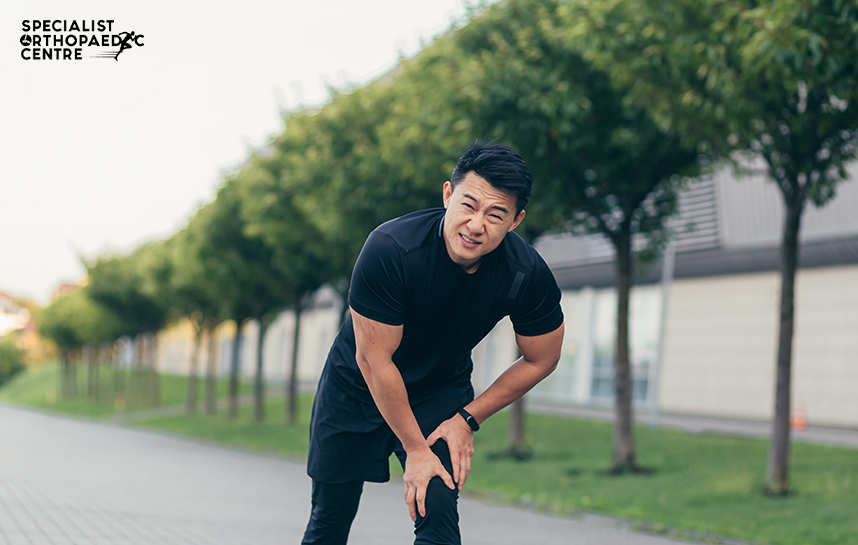
Knee pain is one of the most common lower limb issues that people face as they grow older. It can be caused by a number of different factors that involve physical activity, trauma, or it can be the result of a breakdown of your cartilage. Common Causes of Knee Pain Knee Injuries The knee is a complex joint that requires tendons, ligaments, bones, and muscles to all work in tandem. An injury to any one of these components can cause severe knee pain and restrict your mobility. Some common injuries to the knee include ACL tears and knee fractures. ACL tears refer to partial or complete tears of the Anterior Cruciate Ligament which is a band of tissue that connects your thighbone to your shinbone. ACL tears can occur during activities that involve sudden stops or changes in direction. For complete tears, the recommended course of treatment will likely be ACL surgery in Singapore to regain full mobility and strength in the knee joint. A knee fracture is a break in the kneecap, which is a small bone that sits at the front of your knee. A direct impact to the kneecap can cause breaks in this bone which can range from relatively minor stable hairline fractures to more serious displaced or open fractures. Mechanical Problems Mechanical problems in your knee and other joints can also give rise to persistent knee pain. When a dislocation happens, it can be extremely painful and you may be able to actually see the kneecap visually out of place or at an odd angle. In many cases, the kneecap is able to pop back into place on its own. Arthritis There are two main types of arthritis that affect the knee are Osteoarthritis and Rheumatoid Arthritis. Both these conditions can cause inflammation and pain in your knee joints, although they have different underlying causes. Osteoarthritis happens gradually over time and is exacerbated by factors such as ageing, obesity, prior injury, overuse, and genetics. Rheumatoid Arthritis is an autoimmune disorder that results in swelling, bone erosion, and joint deformity. Total knee replacements in Singapore may be required if your knee joint is worn out beyond repair. Non-Invasive Treatment Options For Knee Pain RICE Protocol The RICE protocol is usually the first line of home treatment for minor knee injuries. It reduces swelling, pain, discomfort, and promotes healing Non-steroidal anti-inflammatory drugs (NSAIDs) NSAIDs are used to manage pain, inflammation, and fevers in the body. They include medication such as aspirin, ibuprofen, and diclofenac. They can help with arthritis symptoms and knee pain in general. Steroid injections Steroid injections directly to the knee joint can help relieve pain from injury or arthritis. They work rapidly but using them too often may damage cells in the knee that make cartilage. Physical Therapy Physical therapy is one of the recommended non-invasive treatment methods for knee pain. It can reduce pain, swelling, and stiffness while also restoring mobility and strength. Inactivity is likely to make knee pain worse and physical therapy can help mitigate this. Braces and Splints Braces and splints are used to keep your knee in place while healing and provide support for the joint to reduce the pressure and strain on the joint. You should consult your orthopaedic surgeon in Singapore about wearing a knee brace or splint and discuss how long you should keep it on for. Surgical Treatment Options ACL Reconstruction An ACL reconstruction involves removing the damaged or torn ACL in the knee and replacing it with a graft tendon. It’s an outpatient procedure and recovery takes a few months with physical therapy and rehabilitation. Total Knee Replacement A total knee replacement is a major surgery where damaged knee joints are cut away and replaced with artificial parts. It provides pain relief, improved mobility, and greater quality of life for patients with major knee problems which have progressed to an advanced stage. Learn More: All About The Latest Advancements In Knee Replacement Surgery Arthroscopy A knee arthroscopy is a surgical procedure that allows doctors to diagnose and treat a number of knee problems. A small camera is inserted into the knee and small incisions are made to allow your orthopaedic surgeon to enter and manipulate miniature surgical instruments. At the Specialist Orthopaedic Centre in Singapore, our mission is to improve the quality of our patient’s lives through specialised, empathetic orthopaedic care. Contact us today to find out more about our services and make an appointment with us.
Post
Whenever we walk, run, or jump, our feet and especially our ankles bear the brunt of the stress. Over time, this strain on our ankles can eventually lead to severe injuries which may not respond to non-surgical interventions like rest, custom orthotics, braces, or physical therapy.  Learn More: What Treatments Do Ankle Specialists Offer Their Patients? The way to move forward in such cases might be to opt for ankle surgery to repair fractures, ligament tears, and joint or tendon problems. Here’s a non-exhaustive list of the common types of ankle surgeries performed by orthopaedic doctors in Singapore.   1) Arthroscopy An Arthroscopy, also referred to as a “keyhole surgery” is a procedure where a camera is inserted into your ankle to diagnose problems with joint and ligaments. During an Arthroscopy, small cuts are made at the bottom of your feet and the camera is inserted through these incisions.  Arthroscopy is an effective, minimally-invasive surgery that can both diagnose and treat ankle instability, ankle impingement, bone spurs, torn ligaments, or scar tissue. Arthroscopy is usually performed as an outpatient surgery and you should be able to go home on the same day with recovery time usually spanning a few weeks. 2) Ankle Fracture Fixation An ankle fracture in Singapore is a break to one of the three bones that make up the ankle joint. Non-severe fractures, known as nondisplaced fractures, where the bones have not moved out of place can be treated via leg casts and special boots.  However, displaced fractures, where the bone fragments are separated, might require surgery. Especially if the ankle joint has been dislocated as well. Depending on the extent of the fracture, screws and plates might be inserted during the surgery to keep the joint bones in place during recovery. 3) Ankle Replacement If you have a severe case of osteoarthritis, and your ankle cartilage has broken down completely, ankle replacement surgery might be recommended by your orthopaedic doctor to remove the damaged cartilage and replace it with artificial parts.  These artificial joints help the ankle with more natural movement patterns to reduce risk of arthritis happening in nearby joints. The entire surgical procedure for a complete ankle replacement might take several hours and you might need to be on crutches for a few weeks. 4) Ankle Tendon Repair Tendons are banded tissues that connect muscle to bone. They work together to ensure full functionality and stability of the ankle joint. Injuries to ankle tendons include acute tears, tendonitis, tendinopathy, and tendinosis. While non-surgical treatment methods are preferred, in cases where they are ineffective, surgical ankle tendon repair becomes a necessity. During an ankle tendon repair, an incision is made and damaged tissues are removed. Torn ends of tendons may also be sewn together. Recovery might take several months with physical therapy playing an important role. 5) Lateral ankle ligament reconstruction A lateral ankle ligament reconstruction is a surgery that is used to tighten and strengthen ankle ligaments. It is generally recommended by foot and ankle specialists for patients who have loose or overstretched ankle ligaments leading to chronic ankle instability.  It is usually performed as an outpatient surgery and there are several different techniques that can be called upon for the procedure, depending on the type of injury sustained. Most commonly, the patient’s ligament can be repaired with stitches. An alternative option is to use a grafted tendon to repair the ligament. 6) Achilles Tendon Treatment The achilles tendon connects the muscles in your calf to your heel bone. If you have completely ruptured your achilles tendon, surgery might be the preferred way to move forward to reduce chances of re-rupture. Surgery for achilles tendon involves making an incision at the back of your ankle and stitching the torn tendon back together. Recovery timeline for achilles tendon surgery is around 4-6 months depending on injury severity. As with all types of surgery, there’s always an element of risk involved. In many cases, the benefits to the patient are weighed against the potential complications before any decision is made about treatment protocol. Other factors like the quality of life for the patient and how it may affect their occupation or lifestyle are also considered. As a foot and ankle specialist in Singapore, Dr Kannan Kaliyaperumal is an orthopaedic surgeon with years of experience in lower limb disorders and surgical treatment. At his clinic, the Specialist Orthopaedic Centre, the aim is to provide quality medical treatment that is customised to fit a patient’s needs and means. Contact us today to learn more about the services we provide and make an appointment with our team. 

Search