Mount Elizabeth Novena Specialist Centre
Parkway East Medical Centre
1 Farrer Park Station Road, Connexion

Tag: Osteoarthritis

Post
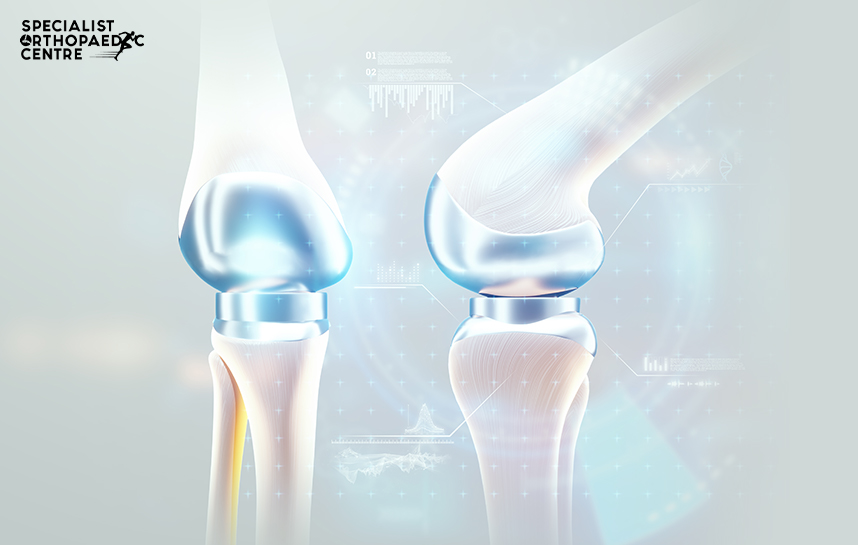
The knee is a large and complex joint that is constantly under enormous strain. It supports the weight of your body while facilitating movement and providing stability. This critical role it plays also makes it prone to injuries from overuse, trauma, degenerative conditions, and the natural ageing process. Knee injuries can often be debilitating and limit mobility and daily activities. Minor injuries can be treated with rest and physical therapy. However when injuries are severe enough to cause chronic pain, mobility impairment, or extensive joint damage, then a knee replacement surgery in Singapore is usually the last viable option. The two main types of knee replacement surgery are partial knee replacements and total knee replacements.  Let’s dive into both these procedures to find out what they are, how they are different, and the benefits and drawbacks of both. The two types of knee replacements  A total knee replacement first involves the complete removal of the damaged joint surfaces in all three compartments of the knee. Then, an artificial joint either made of metal or plastic is implanted into the knee to restore functionality.  A partial knee replacement is similar except that only specific damaged areas, either the inside or outside, are removed and replaced with an artificial implant. Understanding the differences between these procedures is crucial for patients and their healthcare providers to make informed decisions. Partial knee replacements Wherever possible, partial knee replacements are preferred over total knee replacements for suitable candidates. Partial replacements are less invasive as only one compartment of the damaged knee is removed. It preserves the healthy parts of the knee, which means a smaller incision and less disruption to the surrounding tissues. This also leads to a lower risk of complications. Recovery time and healing from a partial knee replacement is much faster than from a full knee replacement surgery. Partial knee replacements may require 1-2 days of hospital stay after the procedure while full knee replacements need closer to 3-4 days. Patients may return to their normal activities after 4-6 weeks as compared to 3-6 months for a full knee replacement. You are also likely to live a more active life with a partial knee replacement as it preserves your range of motion and knee function much better.  There are a few downsides to partial knee replacement surgery which need to be carefully considered. Partial knee replacements may have a slightly higher risk of earlier loosening and the need for revision, although the overall risk is still low. However the main drawback of partial knee replacements is the fact that not everyone can be a suitable candidate. To qualify for a partial knee replacement, patients should not have extensive damage that affects multiple knee joints. Other factors such as poor knee alignment, ligament instability, limited range of motion, or excessive deformity, may make total knee replacement a more appropriate option for some patients. Total knee replacements For patients who have extensive damage in multiple areas of the knee, total knee replacements are almost always recommended. This is especially true for conditions like advanced osteoarthritis which can affect multiple compartments of the knee joint.  Advanced osteoarthritis causes severe pain, mobility issues, and significant impairment. Total knee replacements in Singapore may help to relieve pain and restore quality of life for patients as they may be able to return to their normal activities after recovering from the procedure. Osteoarthritis can also cause deformities to the knee, such as severe bowing, which may be a contraindication for partial knee replacement. If there is significant damage to articular surfaces, cartilage, ligaments, and other structures of the knee joint, a partial replacement may not adequately address the issues and a total knee replacement could be a more viable option. Modern knee implants are engineered to be durable and long lasting and may provide improved knee function for 15-20 years. Learn More: Guide To Preparing For A Knee Replacement Surgery The decision to choose either a partial or full knee replacement is one that has to be carefully considered with your orthopaedic surgeon. Factors such as severity of the knee injury, impact on daily life, patient's overall health, and specific needs of the patient need to be taken into account before a surgical approach is chosen. For patients, it’s important that you are supplied with all the relevant details so you can make an informed decision about the procedure. Dr Kannan Kaliyaperumal is an orthopaedic doctor with extensive experience for lower limb disorders and surgical treatment in Singapore and the region. Contact us today to learn more about our services and reach out to us to make an appointment.
Post
Knee pain is one of the most common lower limb issues that people face as they grow older. It can be caused by a number of different factors that involve physical activity, trauma, or it can be the result of a breakdown of your cartilage. Common Causes of Knee Pain Knee Injuries The knee is a complex joint that requires tendons, ligaments, bones, and muscles to all work in tandem. An injury to any one of these components can cause severe knee pain and restrict your mobility. Some common injuries to the knee include ACL tears and knee fractures. ACL tears refer to partial or complete tears of the Anterior Cruciate Ligament which is a band of tissue that connects your thighbone to your shinbone. ACL tears can occur during activities that involve sudden stops or changes in direction. For complete tears, the recommended course of treatment will likely be ACL surgery in Singapore to regain full mobility and strength in the knee joint. A knee fracture is a break in the kneecap, which is a small bone that sits at the front of your knee. A direct impact to the kneecap can cause breaks in this bone which can range from relatively minor stable hairline fractures to more serious displaced or open fractures. Mechanical Problems Mechanical problems in your knee and other joints can also give rise to persistent knee pain. When a dislocation happens, it can be extremely painful and you may be able to actually see the kneecap visually out of place or at an odd angle. In many cases, the kneecap is able to pop back into place on its own. Arthritis There are two main types of arthritis that affect the knee are Osteoarthritis and Rheumatoid Arthritis. Both these conditions can cause inflammation and pain in your knee joints, although they have different underlying causes. Osteoarthritis happens gradually over time and is exacerbated by factors such as ageing, obesity, prior injury, overuse, and genetics. Rheumatoid Arthritis is an autoimmune disorder that results in swelling, bone erosion, and joint deformity. Total knee replacements in Singapore may be required if your knee joint is worn out beyond repair. Non-Invasive Treatment Options For Knee Pain RICE Protocol The RICE protocol is usually the first line of home treatment for minor knee injuries. It reduces swelling, pain, discomfort, and promotes healing Non-steroidal anti-inflammatory drugs (NSAIDs) NSAIDs are used to manage pain, inflammation, and fevers in the body. They include medication such as aspirin, ibuprofen, and diclofenac. They can help with arthritis symptoms and knee pain in general. Steroid injections Steroid injections directly to the knee joint can help relieve pain from injury or arthritis. They work rapidly but using them too often may damage cells in the knee that make cartilage. Physical Therapy Physical therapy is one of the recommended non-invasive treatment methods for knee pain. It can reduce pain, swelling, and stiffness while also restoring mobility and strength. Inactivity is likely to make knee pain worse and physical therapy can help mitigate this. Braces and Splints Braces and splints are used to keep your knee in place while healing and provide support for the joint to reduce the pressure and strain on the joint. You should consult your orthopaedic surgeon in Singapore about wearing a knee brace or splint and discuss how long you should keep it on for. Surgical Treatment Options ACL Reconstruction An ACL reconstruction involves removing the damaged or torn ACL in the knee and replacing it with a graft tendon. It’s an outpatient procedure and recovery takes a few months with physical therapy and rehabilitation. Total Knee Replacement A total knee replacement is a major surgery where damaged knee joints are cut away and replaced with artificial parts. It provides pain relief, improved mobility, and greater quality of life for patients with major knee problems which have progressed to an advanced stage. Learn More: All About The Latest Advancements In Knee Replacement Surgery Arthroscopy A knee arthroscopy is a surgical procedure that allows doctors to diagnose and treat a number of knee problems. A small camera is inserted into the knee and small incisions are made to allow your orthopaedic surgeon to enter and manipulate miniature surgical instruments. At the Specialist Orthopaedic Centre in Singapore, our mission is to improve the quality of our patient’s lives through specialised, empathetic orthopaedic care. Contact us today to find out more about our services and make an appointment with us.
Post
Knee replacements are a surgical solution to help treat patients who have persistent, chronic knee pain due to worn out knee joints. Usually caused by osteoarthritis, other health conditions like rheumatoid arthritis, gout, or traumatic injuries can also lead to cartilage breaking down in the knee joint. Learn More: Treating the Wear and Tear of Joints Signs You Need A Knee Replacement Before orthopaedic surgery in Singapore is considered, other treatments will be prescribed first. These include lifestyle modifications, steroid injections, braces, and physical therapy. If even after months of rehabilitation and medication you still experience symptoms like knee pain, swelling, stiffness, and loss of function, then you may be considered a candidate for knee replacement surgery. Cost Of Knee Replacement  A knee replacement in a Singapore public hospital cost anywhere between $5,000 to $7,000. This cost increases to about $30,000 for private hospitals. These figures are just estimates and include operation fees, type of surgery (partial or total knee replacement in Singapore), implant costs, and other additional fees. Preparing For A Knee Replacement 1. Prepare Your Home The recovery time after a knee replacement can take several weeks. In view of this, you should set up your home to be a conducive environment for you to rest and recuperate optimally. This involves removing tripping hazards, and ensuring that your essentials are within reach as you will likely be spending a lot of time in bed. Take this time to let your family know how they can aid in your recovery. 2. Stop Taking Certain Medications Some medications can interfere with your surgery. You should inform your orthopaedic doctor in Singapore what medications you are currently taking before the operation. They are well-placed to advise you on what to take and what to stop and when you can continue taking them during your recovery. 3. Condition Your Body Exercise and physical therapy play a big role in your recovery after a knee replacement surgery. To support this process, you can do some lower body strength building exercises before the procedure. Being proactive can make it easier for you later on, and improve recovery during the post-operative stage. 4.Cut Down On Smoking And Drinking Smoking and drinking diminish your physical health. As much as possible, try to cut down on unhealthy lifestyle habits before your knee replacement so you are optimally prepared for the surgical procedure and the recovery after. 5.Speak To Your Doctor When in doubt, ask your orthopaedic doctor questions. Don’t be shy or hesitant. They are well-trained and equipped to furnish you with the answers you might need. Clarify your doubts and talk through the procedure and post-operative recovery stage with them so you know what to expect. 6. Go For All Pre-Surgery Appointments As much as possible, try not to skip any of your medical appointments before your surgery. Important tests and evaluations will be conducted during this stage. If you can’t make an appointment, be sure to let your doctor know beforehand and reschedule. What To Take Note Of Swelling after orthopaedic surgery will peak in the first 7-10 days after the procedure. Try to have your leg elevated above the level of your heart by placing a pillow under your calf or ankle, not under your knee. You can also use ice to reduce the swelling and ease some discomfort. As far as possible, ensure your knees are kept straight. This is an important factor to give the knee joint ample time to heal. You will be provided with a knee brace and it should be worn at all times as instructed by your doctor. Physical therapy sessions will also be scheduled and you should aim to go for all your appointments. Keep in mind that much of your post-surgery recovery is very much in your hands. For the first few days give your knee the time and environment to heal as much as possible. After that, physical therapy and strength building exercises can help your body adapt to the knee replacement to restore mobility. As a subspecialist for lower limb disorders and surgical treatment in Singapore, Dr Kannan Kaliyaperumal has experience and training with total knee replacement surgeries. Reach out to us today via our contact us page to set up an appointment and our support team will be happy to assist you.
Post
Whenever we walk, run, or jump, our feet and especially our ankles bear the brunt of the stress. Over time, this strain on our ankles can eventually lead to severe injuries which may not respond to non-surgical interventions like rest, custom orthotics, braces, or physical therapy.  Learn More: What Treatments Do Ankle Specialists Offer Their Patients? The way to move forward in such cases might be to opt for ankle surgery to repair fractures, ligament tears, and joint or tendon problems. Here’s a non-exhaustive list of the common types of ankle surgeries performed by orthopaedic doctors in Singapore.   1) Arthroscopy An Arthroscopy, also referred to as a “keyhole surgery” is a procedure where a camera is inserted into your ankle to diagnose problems with joint and ligaments. During an Arthroscopy, small cuts are made at the bottom of your feet and the camera is inserted through these incisions.  Arthroscopy is an effective, minimally-invasive surgery that can both diagnose and treat ankle instability, ankle impingement, bone spurs, torn ligaments, or scar tissue. Arthroscopy is usually performed as an outpatient surgery and you should be able to go home on the same day with recovery time usually spanning a few weeks. 2) Ankle Fracture Fixation An ankle fracture in Singapore is a break to one of the three bones that make up the ankle joint. Non-severe fractures, known as nondisplaced fractures, where the bones have not moved out of place can be treated via leg casts and special boots.  However, displaced fractures, where the bone fragments are separated, might require surgery. Especially if the ankle joint has been dislocated as well. Depending on the extent of the fracture, screws and plates might be inserted during the surgery to keep the joint bones in place during recovery. 3) Ankle Replacement If you have a severe case of osteoarthritis, and your ankle cartilage has broken down completely, ankle replacement surgery might be recommended by your orthopaedic doctor to remove the damaged cartilage and replace it with artificial parts.  These artificial joints help the ankle with more natural movement patterns to reduce risk of arthritis happening in nearby joints. The entire surgical procedure for a complete ankle replacement might take several hours and you might need to be on crutches for a few weeks. 4) Ankle Tendon Repair Tendons are banded tissues that connect muscle to bone. They work together to ensure full functionality and stability of the ankle joint. Injuries to ankle tendons include acute tears, tendonitis, tendinopathy, and tendinosis. While non-surgical treatment methods are preferred, in cases where they are ineffective, surgical ankle tendon repair becomes a necessity. During an ankle tendon repair, an incision is made and damaged tissues are removed. Torn ends of tendons may also be sewn together. Recovery might take several months with physical therapy playing an important role. 5) Lateral ankle ligament reconstruction A lateral ankle ligament reconstruction is a surgery that is used to tighten and strengthen ankle ligaments. It is generally recommended by foot and ankle specialists for patients who have loose or overstretched ankle ligaments leading to chronic ankle instability.  It is usually performed as an outpatient surgery and there are several different techniques that can be called upon for the procedure, depending on the type of injury sustained. Most commonly, the patient’s ligament can be repaired with stitches. An alternative option is to use a grafted tendon to repair the ligament. 6) Achilles Tendon Treatment The achilles tendon connects the muscles in your calf to your heel bone. If you have completely ruptured your achilles tendon, surgery might be the preferred way to move forward to reduce chances of re-rupture. Surgery for achilles tendon involves making an incision at the back of your ankle and stitching the torn tendon back together. Recovery timeline for achilles tendon surgery is around 4-6 months depending on injury severity. As with all types of surgery, there’s always an element of risk involved. In many cases, the benefits to the patient are weighed against the potential complications before any decision is made about treatment protocol. Other factors like the quality of life for the patient and how it may affect their occupation or lifestyle are also considered. As a foot and ankle specialist in Singapore, Dr Kannan Kaliyaperumal is an orthopaedic surgeon with years of experience in lower limb disorders and surgical treatment. At his clinic, the Specialist Orthopaedic Centre, the aim is to provide quality medical treatment that is customised to fit a patient’s needs and means. Contact us today to learn more about the services we provide and make an appointment with our team. 

Post
Geriatric orthopaedics is a branch of medicine that revolves around identifying and addressing certain musculoskeletal conditions of the elderly. As we age, our bones and muscles tend to degenerate and not seeking treatment early may lead to deterioration. Singapore is currently one of the most rapidly ageing societies in Asia with 15.2% of residents aged 65 years and above. In a nation where we are facing the challenges of an ageing population, geriatrics orthopaedics can be extremely beneficial. Common Geriatric Orthopaedic Conditions  Geriatric orthopaedic conditions can lead to much pain and discomfort, thus decreasing the overall quality of life. Beyond negatively impacting physical wellbeing, the inability to perform certain activities or tasks may affect mental wellbeing too. Below are some common geriatric orthopaedic conditions that can be treated at an orthopaedic clinic in Singapore. Knee Arthritis   Arthritis is the swelling or tenderness of one or more joints. Those suffering from this condition may experience pain or stiffness in their joints that limits their movement and worsens with age. There are two types of arthritis – osteoarthritis and rheumatoid arthritis. The former is more common and occurs due to normal wear and tear while the latter is an autoimmune disease where the lining of the joints are being attacked by the immune system. Osteoporosis   Osteoporosis happens when the bone loss is greater than bone formation in the elderly. This can occur due to the aging process, or medical conditions like diabetes, or a lack of dietary intake of calcium and Vitamin D. This causes the bones to be fragile and brittle. Since symptoms are hard to spot in the early stages, a stooping posture, loss of height and easily breakable bones indicate symptoms of late onset osteoporosis. Osteoporosis increases the risk of fractures, therefore it is highly advisable to visit an orthopaedic clinic for diagnosis and treatment.  Fragility Fractures As bone density decreases with age, falls become extremely detrimental to the elderly, often resulting in severe consequences like serious fractures. Fractures are a partial or complete break in the bone. The 3 commonest osteoporotic fractures in Singapore are hip fractures, distal radius fractures and vertebral compression fractures.  Treatment Options  When it comes to geriatric orthopaedic treatments, it all depends on your condition. It is best to consult an orthopaedic doctor in Singapore to get appropriate recommendations that are tailored to you. For instance, in critical cases of knee arthritis, knee gel injections or knee replacement may be necessary to treat the condition. Knee gel injections help to lubricate the joints in the knee to improve movement.  In more severe cases of knee arthritis, a knee replacement surgery is required. This reduces pain and restores mobility. Patients with severe arthritis or injuries to their knees may benefit from this procedure. Alternatively, geriatric orthopaedics also include non-invasive treatments such as medication or physiotherapy. With regards to arthritis, your orthopaedic doctor may recommend analgesic medications or counterirritants including creams and ointments to alleviate inflammation and pain in the joints. Orthopaedic physiotherapy can also aid in such conditions. Your orthopaedic doctor will develop a series of physio exercises to help treat the muscles, joints and ligaments for enhanced movement and minimise discomfort. Prevention Measures   Making lifestyle changes is one of the best ways to prevent geriatric orthopaedic conditions. This involves sufficient intake of calcium, vitamin D and regular exercise, all of which enrich the bones, keeping them strong and healthy. Calcium and vitamin D can be derived from supplements or by switching up your diet to contain more of certain foods. Vitamin D-rich foods include cod liver oil, trout and salmon while calcium-rich foods consist of dark green leafy vegetables and soy products. In addition, decreasing alcohol consumption has also been shown to reduce the risk of osteoporosis.        While we may not be able to completely prevent geriatric orthopaedic conditions, we can definitely slow down the process with an active, healthy lifestyle and getting treatment early from an orthopaedic doctor. At Specialist Orthopaedic Centre, we offer a range of geriatric orthopaedic treatments to help your body return to its peak function. Contact us today for more information.  
Search