Mount Elizabeth Novena Specialist Centre
Parkway East Medical Centre
1 Farrer Park Station Road, Connexion

Tag: orthotics

Post
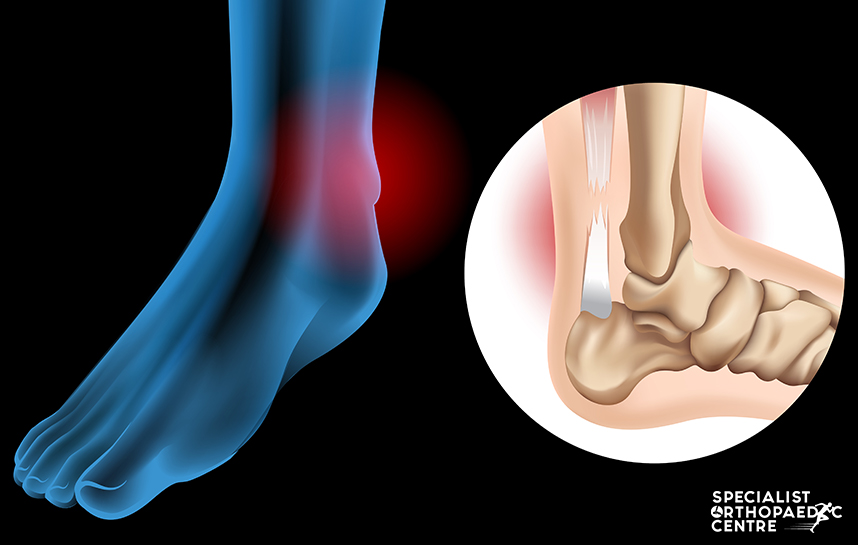
While the achilles tendon is the strongest and thickest tendon in the body, it also encounters a lot of stress on a daily basis, as well as during athletic activities that involve running, jumping, or sudden changes in direction. This makes the achilles tendon fairly susceptible to injuries in both high-performance athletes and regular people. Learn More: 3 Common Foot & Ankle Conditions You Shouldn’t Ignore Types of Achilles Tendon Injuries There are two main types of achilles tendon injuries. Tendonitis, which is due to overuse or damage of the achilles tendon or a rupture which is complete or partial break in your tendon. Tendonitis causes pain down the back of your leg and around your heel area.It can also lead to thickening and calcification of the tendon. There are two kinds of tendonitis, categorised by the location of the injury. If the fibres of the middle portion of the tendon are torn, then it is diagnosed as noninsertional achilles tendonitis. If the lower part of the tendon is injured then it is known as insertional achilles tendonitis. Both types of tendonitis can occur separately or together. If the tears in your achilles tendon fibres cause a complete or a partial tear in your tendon, you might hear a pop or experience a popping sensation along with a sudden sharp pain. A tendon rupture requires immediate medical attention. Risk Factors For Achilles Tendon Injuries Athletic Activities Athletes who engage in sports where there is repetitive strain put on their achilles tendon are at higher risk for achilles tendon injuries. A change in competitive or training schedule, playing surface, or intensity of activities can also create a sudden increase in strain to the achilles tendon resulting in a higher chance for tendon injury. Tight Or Weak Calf Muscles If you don’t warm up adequately before exercising, your calf muscles may be tight and you may end up overstretching it during your activity. Weak and untrained calf muscles can also cause similar issues. Overstretching your calf muscle can result in soft tissue damage to your achilles tendon. Bone Spurs Bone spurs can develop on almost any bone including the heel. Bone spurs on the heel can rub against the tendon, leading to long-term damage. Wearing Improper Footwear Wearing the wrong shoes during exercise or other activities can cause injury to your achilles tendon in Singapore. Shoes which don’t support your foot fully, or don’t allow your tendon to fully extend, can over time make your achilles tendon more vulnerable to overstretching and tearing. Treatments For Achilles Tendon Injuries RICE Rest, Ice, Compression, and Elevation is a good at-home treatment protocol for minor strains to the achilles tendon. It reduces swelling and decreases blood flow to the area to decrease inflammation and promote healing. Physical Therapy Physical therapy can support achilles tendonitis patients by reducing pain in the heel and restoring strength, flexibility, and mobility to the injured tendon. Orthotics Orthotics can be used in combination with other treatment methods for achilles tendon issues. They reduce the load on the achilles tendon and improve recovery timelines. Night Splinting Night splints are braces worn on the legs which stretch the achilles tendon at the back of the heel and prevent it from contracting. They have to be worn at night while you sleep to provide a constant stretch to your achilles tendon and enhance healing. They are a conservative but effective long term achilles tendonitis treatment in Singapore. Platelet Rich Plasma Injections Platelet Rich Plasma (PRP) Injections are done by taking some of the patient’s blood and spinning it to separate out the different layers. The plasma layer, which contains a high concentration of platelets is then drawn and injected into the injury site of the achilles tendon. These platelets can release growth factors which promote healing. Extracorporeal Shock Wave Therapy Extracorporeal Shock Wave Therapy is a non-invasive treatment procedure for achilles tendonitis. It involves delivering low energy sound waves to the affected area to increase blood flow and speed up healing. Surgery For more severe achilles tendon injuries, surgery may be the recommended way forward for recovery. Minimally invasive achilles tendon surgery to repair ruptured tendons decrease the risk of complications as compared to traditional surgery. It allows for very strong repair while limiting exposure of the tendon and permits a faster timeline to return to normal activities. Debridement surgery is an option for patients with achilles tendinopathy that has not responded to non-surgical treatment methods. It involves surgically removing damaged tendon tissue or bone spurs. The remaining tendon is then repaired with sutures or stitches. A gastrocnemius recession can be used to help patients with chronic achilles tendonitis by lengthening the muscles and tendons at the back of the leg. This in turn allows the foot to flex properly into a more natural position. As an experienced Orthopaedic Surgeon with experience in reconstructive foot and ankle surgery, Dr Kannan Kaliyaperumal offers a wide range of services and treatments at the Specialist Orthopaedic Centre in Singapore. Contact us today to set up an appointment with our clinic and our support team will get back to you.
Post
Bunions are deformities that form at the base of your big toe. They present as hard bony bumps that slowly develop and grow larger over time. The causes of bunions are still not fully understood although it is speculated that genetic heritability, improper footwear, or congenital defects could be contributing factors. If left untreated, bunions can lead to painful symptoms, affect your mobility, and force you to make unwanted lifestyle choices.  Learn More: What is a Bunion? Impaired Foot Function Bunions are created when the joint at the base of your big toe gets misaligned. This causes the bony bump that is the hallmark of all bunions. At smaller sizes, you might be able to ignore the protrusion. However as they grow larger, they can begin causing problems with your other toes. This can lead to frequent occurrences of corns, hammertoes, ingrown toenails, and calluses. The pain from a bunion might also alter the way you walk. You might unconsciously shift weight away from your big toe joint which can lead to added strain on the balls of your feet, a condition known as metatarsalgia. If your bunions have progressed to this stage, you may want to consider visiting an orthopaedic doctor in Singapore to explore treatment options. Bunions May Discourage Active Lifestyles Many people already lead sedentary lives which lowers their physical health and increases the risk of chronic diseases. The pain and discomfort from a bunion in your foot can exacerbate these unhealthy habits and lead to an avoidance of activities involving walking or running. Severe bunions can even impose restrictions on simple everyday tasks like walking to a nearby supermarket. Foot Arthritis People with bunions are more likely to develop foot arthritis as their big toe joint is out of alignment and more stress is placed on their cartilage. Over time, wear and tear causes cartilage to thin. Without cartilage, bones end up rubbing together, causing stiffness and inflammation. Affects Your Movement Larger more severe bunions are not only more painful, they can affect your gait and balance. The bend from bunion formation makes your big toe bend inwards towards your other toes. This altered posture impacts the way your foot hits the ground and can make you more prone to tripping and falling. For people with other mobility problems, minimally invasive bunion surgery might be a good way to reduce their future risk of injury. More Prone To Feet Infections Corns and calluses are a side effect of developing bunions. Although they are mostly harmless, on occasion they can get infected and might end up requiring medical or even surgical intervention. Since bunions lead to an increasing frequency of corn and callus formation, individuals with severe bunion issues might find that they are more susceptible to such foot infections. Unable To Wear Certain Footwear Bunions can also make it harder for your feet to slide into certain types of footwear, especially those that are tight or form-fitting. It can be difficult to find shoes that don't aggravate the condition, while also being comfortable for walking. One solution lies in specially designed orthotics which are commonly used as a method of dealing with bunions. On the surface, bunions might seem like minor inconveniences. But as time goes on, they can develop very real problems that affect your quality of life significantly. If you have a bunion, it is advisable to visit a specialist to discuss options like footwear modifications or bunion surgery in Singapore. With advances in technology,minimally invasive bunion surgeries can even be conducted as a day surgery to minimise pain and trauma. As a foot and ankle specialist in Singapore, Dr Kannan Kaliyaperumal has experience and training in helping patients with bunions. To learn more about treatment options and the services we provide, reach out to us via our contact us page today.
Post
Whenever we walk, run, or jump, our feet and especially our ankles bear the brunt of the stress. Over time, this strain on our ankles can eventually lead to severe injuries which may not respond to non-surgical interventions like rest, custom orthotics, braces, or physical therapy.  Learn More: What Treatments Do Ankle Specialists Offer Their Patients? The way to move forward in such cases might be to opt for ankle surgery to repair fractures, ligament tears, and joint or tendon problems. Here’s a non-exhaustive list of the common types of ankle surgeries performed by orthopaedic doctors in Singapore.   1) Arthroscopy An Arthroscopy, also referred to as a “keyhole surgery” is a procedure where a camera is inserted into your ankle to diagnose problems with joint and ligaments. During an Arthroscopy, small cuts are made at the bottom of your feet and the camera is inserted through these incisions.  Arthroscopy is an effective, minimally-invasive surgery that can both diagnose and treat ankle instability, ankle impingement, bone spurs, torn ligaments, or scar tissue. Arthroscopy is usually performed as an outpatient surgery and you should be able to go home on the same day with recovery time usually spanning a few weeks. 2) Ankle Fracture Fixation An ankle fracture in Singapore is a break to one of the three bones that make up the ankle joint. Non-severe fractures, known as nondisplaced fractures, where the bones have not moved out of place can be treated via leg casts and special boots.  However, displaced fractures, where the bone fragments are separated, might require surgery. Especially if the ankle joint has been dislocated as well. Depending on the extent of the fracture, screws and plates might be inserted during the surgery to keep the joint bones in place during recovery. 3) Ankle Replacement If you have a severe case of osteoarthritis, and your ankle cartilage has broken down completely, ankle replacement surgery might be recommended by your orthopaedic doctor to remove the damaged cartilage and replace it with artificial parts.  These artificial joints help the ankle with more natural movement patterns to reduce risk of arthritis happening in nearby joints. The entire surgical procedure for a complete ankle replacement might take several hours and you might need to be on crutches for a few weeks. 4) Ankle Tendon Repair Tendons are banded tissues that connect muscle to bone. They work together to ensure full functionality and stability of the ankle joint. Injuries to ankle tendons include acute tears, tendonitis, tendinopathy, and tendinosis. While non-surgical treatment methods are preferred, in cases where they are ineffective, surgical ankle tendon repair becomes a necessity. During an ankle tendon repair, an incision is made and damaged tissues are removed. Torn ends of tendons may also be sewn together. Recovery might take several months with physical therapy playing an important role. 5) Lateral ankle ligament reconstruction A lateral ankle ligament reconstruction is a surgery that is used to tighten and strengthen ankle ligaments. It is generally recommended by foot and ankle specialists for patients who have loose or overstretched ankle ligaments leading to chronic ankle instability.  It is usually performed as an outpatient surgery and there are several different techniques that can be called upon for the procedure, depending on the type of injury sustained. Most commonly, the patient’s ligament can be repaired with stitches. An alternative option is to use a grafted tendon to repair the ligament. 6) Achilles Tendon Treatment The achilles tendon connects the muscles in your calf to your heel bone. If you have completely ruptured your achilles tendon, surgery might be the preferred way to move forward to reduce chances of re-rupture. Surgery for achilles tendon involves making an incision at the back of your ankle and stitching the torn tendon back together. Recovery timeline for achilles tendon surgery is around 4-6 months depending on injury severity. As with all types of surgery, there’s always an element of risk involved. In many cases, the benefits to the patient are weighed against the potential complications before any decision is made about treatment protocol. Other factors like the quality of life for the patient and how it may affect their occupation or lifestyle are also considered. As a foot and ankle specialist in Singapore, Dr Kannan Kaliyaperumal is an orthopaedic surgeon with years of experience in lower limb disorders and surgical treatment. At his clinic, the Specialist Orthopaedic Centre, the aim is to provide quality medical treatment that is customised to fit a patient’s needs and means. Contact us today to learn more about the services we provide and make an appointment with our team. 

Search