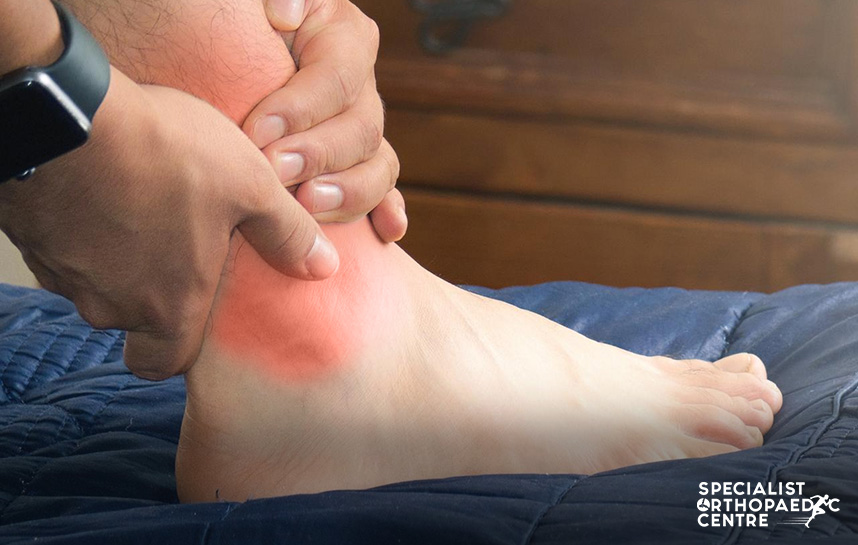
Your ankles are complex structures of tendons, muscles, and soft tissues that not only support the weight of your body, but also allow your feet to flex, move from side to side, and rotate. This complexity and range of motion is what causes ankle injuries to happen fairly frequently.
Ankle pain can happen for a number of reasons ranging from inflammation from overuse, simple sprains to ankle fractures, which is the most severe form of injury which may require surgery. Ankle pain is a common symptom and risk factors include sports injuries or trauma. Read on to learn more about the different causes of ankle pain and tips to prevent injuries, reduce discomfort and the various treatment options.
Bursitis
Ankle bursitis is the inflammation of small fluid-filled sacs in your ankle called bursae. The bursa in your ankle help cushion the ankle joint and provide lubrication to make movement easier.
When inflamed, there is usually pain and swelling in the ankle. Other symptoms include limping to avoid putting weight on your ankle, redness, and fever or chills in the rare case of infection.
Ankle bursitis has overlapping symptoms with other conditions such as gout and hence it’s important to visit an ankle specialist in Singapore for an accurate diagnosis.
Tendonitis
Ankle tendons are bands of fibrous tissue that connect foot and ankle muscles to bones. They work together to support movement, balance, and stability while walking or running.
Ankle tendonitis is a condition where these tendons become inflamed due to overuse, injury, or disease. Due to the high daily usage of our ankle tendons, they are some of the most common places to develop tendonitis. Presentation can be with swelling and limited range of motion of the ankle joint. A simple & effective solution for tendonitis due to overuse is to rest and ice the ankle joint. This should allow the inflamed tendon to heal.
Ankle Sprains & Ligament Tears
Ankle sprains occur when the ligaments, which connect bones to each other, overstretch or tear when forced into unnatural positions.
The severity of ankle sprains can range from mild to severe. In most cases, a mild strain occurs when an ankle ligament gets overstretched and becomes tender, swollen. This can happen with a low velocity trauma like missing a step or a high velocity injury during a football game.
However, signs that the ankle injury may be more than just a simple ankle sprain are: excessive pain, bruising and persistent swelling that does not settle within 3-5 days. In such a scenario, it is safer to consult a medical practitioner and perform further investigations like an X-ray, or a scan to exclude a bone injury, cartilage injury, ligament or tendon injuries of the ankle.
In the more severe case of an ankle ligament tear, initial conservative treatment like ultrasound therapy, tendon strengthening and bracing can be tried. The usual time frame to heal a torn ligament is about 4 to 6 weeks, depending on the severity of the ligament tear. Non-healing ligament tears and patients who persist to have a loose ankle may require surgical treatment.
Fractures
Ankle fractures in Singapore commonly happen when the ankle sustains a twisting trauma during intense sports, running on uneven surfaces, or falling from a height. If a fracture is suspected, an X-ray or CT scan can help determine the severity of the injury.
Immediate and severe pain is the first symptom of ankle fractures, along with swelling, bruising, and tenderness. There can also be numbness and deformity in some cases.
Tips For Treating And Preventing Ankle Injuries
Using The RICE Method
RICE stands for Rest, Ice, Compression, and Elevation. It is a simple method of care for minor injuries that can reduce swelling, pain and speed up healing. RICE works best for mild pain or swelling in your ankle. It is best to ensure that there are no structural injuries to the ankle through some simple investigations with a specialist if the RICE method does not reduce the swelling.
Maintain A Healthy Weight
Increased weight puts more strain on all the different parts of the ankle and maintaining a healthy weight is ideal to prevent future injury.
Strengthen Supporting Muscles
There are simple exercises that can be practised at home to help strengthen your ankles and increase your range of motion. Doing so reduces the risk of ankle ligament tears as stronger, more flexible ankles are more resistant to getting hurt through normal usage. Pay attention to specific conditioning exercises that focus on ankle strengthening.
Wear Supportive Footwear
Certain kinds of supportive footwear have been found not only reduce the incidence of ankle injuries occurring, but can also help in the mechanics of the activities themselves. They help cushion the impact of running or walking and lower the likelihood of missteps twisting your ankle.
Warming Up
Properly conducted warm-up stretches that work and rotate the ankles prior to exercise may contribute to an overall lower risk of injuries occurring. The benefits of warming up include increasing blood flow to the feet and increasing flexibility and mobility in your joints.
Visit An Orthopaedic Doctor
If you have a mild ankle sprain then it’s perfectly fine to stay at home and rest by following the RICE methodology. Importantly, you should avoid putting too much weight on your feet until you have healed completely.
However if your symptoms don’t show any improvements or if your foot is unable to bear any weight at all, then it’s best to visit an ankle specialist as soon as possible. Delaying the visit might aggravate the injury leading to more serious complications.
If you lead an active lifestyle or play intense sports, then you’re likely to have experienced a minor ankle injury at some point. It’s important to keep in mind that without the right precautions, more serious injuries can occur which can severely impact your mobility and hinder your quality of life.
At Specialist Orthopaedic Centre in Singapore, we offer a multitude of treatments and services for patients. Our tailored and personalised approach is aimed at increasing collaboration between doctor and patient and optimising recuperation. Get in touch with us via our Contact Us page to make an appointment or send us any queries you might have.